
While Missouri law does not mandate that bystanders stop at a crash, if you choose to help, you are protected by the Missouri Good Samaritan Law (RSMo § 537.037). To ensure safety, pull over at least 100 feet away, call 911 immediately, and provide a factual statement to the police to assist with insurance and legal recovery.
At Harper, Evans, Hilbrenner & Netemeyer, our car accident attorneys have spent decades helping our neighbors in Columbia and Jefferson City navigate the chaos that follows a car crash.
We know that witnessing an accident is a heavy burden. You want to help, but you don’t want to make things worse.
Which Emergency Numbers Should You Call at a Missouri Crash Scene?
When seconds count, your phone is your most powerful tool. Whether you are on a busy street in Moberly or a rural road in Boone County, getting professional help to the scene is your first priority.
Calling 911: What Info Do Dispatchers Need?
When you call 911, stay on the line. Dispatchers need to know your exact location. Look for mile markers or landmarks, such as the University of Missouri campus, if you are in Columbia MO. Be ready to report:
- The number of vehicles involved.
- If anyone is trapped or unresponsive.
- Immediate hazards like fire, leaking gas, or blocked traffic lanes.
Who Else Should You Contact?
For minor scrapes where no one is hurt, you can call the local police non-emergency line. However, for most accidents, a formal report is required. While you aren’t required to contact insurance companies immediately, having the Missouri State Highway Patrol’s contact info can be helpful for following up on your statement later.
What is Your Legal Role as a Witness in Missouri?
Over the years in litigation, we’ve seen how insurance companies try to twist the facts to minimize payouts. As a witness, you are the “eyes and ears” of justice. Your objective perspective often outweighs the conflicting stories of the drivers involved, especially when determining liability in complex personal injury claims.
What Should You Avoid Doing at the Scene?
It is human nature to want to jump in, but some actions can cause more harm than good:
- Do Not Move Injured Persons: Unless there is an immediate threat of fire, moving someone can aggravate spinal injuries.
- Avoid Roadside Arguments: Emotions run high. Do not debate who was at fault with the drivers. What most people overlook in Missouri law is that these “on-scene” admissions are often used in court later. Stay neutral and let the professionals handle the investigation.
- If you are unsure about your rights after witnessing a traumatic event, you can contact an accident attorney for guidance.
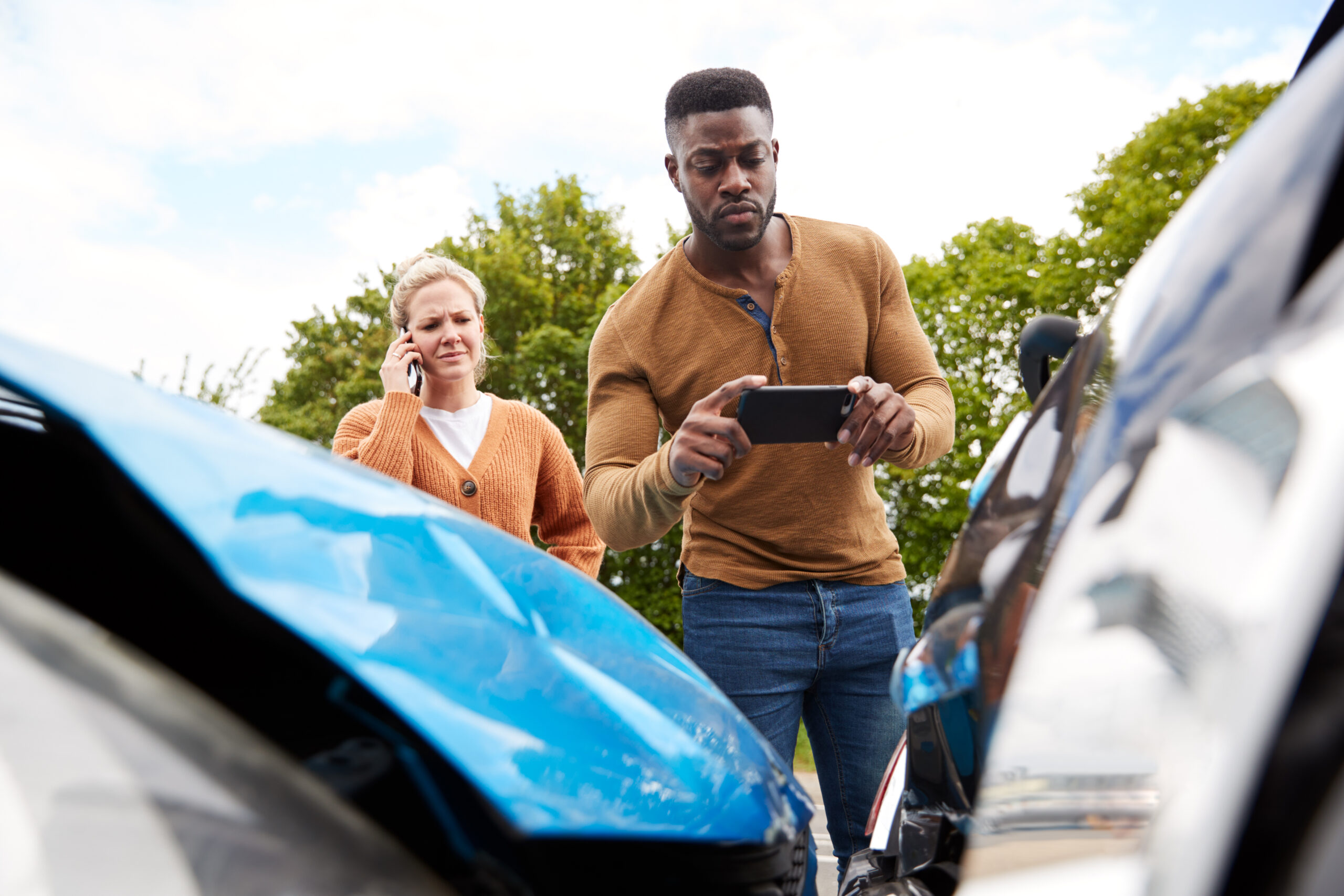
A man and a woman are photographing vehicle damage after an accident.
How Can You Safely Help Accident Victims?
Safety is not just a suggestion; it is a requirement. You cannot help others if you are in danger yourself.
Prioritize Your Own Safety
Pull your car completely off the road. In the high-speed traffic of Mid-Missouri, “rubbernecking” leads to secondary crashes. Keep your hazard lights on and wear high-visibility clothing if available.
Identify Yourself Clearly
Approach the scene calmly. Let the drivers know you’ve called for help and that you saw what happened. This simple act of presence often lowers the heart rate of everyone involved.
Offering First Aid Under the Good Samaritan Law
If you have medical training, you can assist. If not, simply staying with a victim and talking to them until paramedics arrive is a profound act of service. Missouri’s Good Samaritan Law is designed to protect people like those who act in good faith to help their fellow citizens during a crisis.
How Do You Provide Information for a Missouri Insurance Claim?
Documenting the Scene Safely
If the scene is stable, take photos from a distance. Capture:
- Vehicle positions before they are moved.
- Current weather and lighting conditions.
- Traffic signals or signs that might have been ignored.
Giving Your Statement to Authorities
When the police arrive, be brief and factual. Instead of saying, “He was flying down the road,” say, “The car appeared to be traveling faster than the flow of traffic.” Facts win cases; opinions often muddy them.
Key Takeaways for Auto Accident Witnesses in Missouri
In our decades of handling Missouri litigation, we have found that the quality of witness intervention often determines the speed of recovery for the victims. If you find yourself at the scene of a crash on I-70 or a local Columbia intersection, follow this authoritative protocol:
- Prioritize a 100-Foot Safety Buffer: Always pull over at least 100 feet past the accident scene. This creates a “safe zone” for emergency vehicles and protects you from secondary collisions—a leading cause of injury in roadside incidents in Mid-Missouri.
- Initiate an Immediate 911 Direct Report: Do not assume others have called. Provide the dispatcher with specific landmarks (e.g., “The intersection of Broadway and Providence”) to ensure the fastest response from local Boone County emergency services.
- Conduct a 360-Degree Hazard Sweep: Before exiting your vehicle, check for “invisible” hazards such as downed power lines, leaking fuel, or unstable debris. Your safety is the prerequisite for helping anyone else.
- Maintain “Radical Composure” for Victims: In high-stress environments, victims often mirror bystanders’ energy. By staying calm and providing simple reassurance, you can help prevent shock from setting in before paramedics arrive.
- Adopt the “Silent Observer” Protocol: While empathy is vital, avoid discussing fault with the drivers. We’ve seen well-meaning witness comments misquoted in insurance reports; save your detailed observations exclusively for the responding officer’s official report.
- Adhere to “Scope of Training” First Aid: Only provide medical assistance that matches your certification level. Under RSMo § 537.037, Missouri’s Good Samaritan Law, you are protected when acting in good faith, but avoid moving victims unless a life-threatening hazard (like fire) is present.
- Secure Your Status in the Official Record: Ensure the responding officer records your name and contact information. An “anonymous” witness cannot help a victim in court; your contact info is the bridge to a fair legal outcome.
- Verify Your Good Samaritan Protections: Understand that Missouri law is on your side. As long as you are acting without expectation of reward and without gross negligence, you are legally shielded while providing emergency care at the scene.
Common Questions About Witnessing a Crash in Missouri
In our experience, people often hesitate to help because they are worried about the legal “what-ifs.” Here are the answers to the questions our neighbors in Colombia frequently ask us when they find themselves as a witness to a roadside emergency.
Is it mandatory for me to stop if I see a crash?
Legally, if you were not involved in the collision, you have no “duty to stop” under Missouri law. However, from a litigation perspective, we’ve seen cases where a single witness statement was the only thing that prevented an innocent driver from being blamed for a crash they didn’t cause. Stopping is a powerful way to ensure the truth is told.
Could I be held liable if I try to help someone?
This is a common fear, but Missouri provides significant protection. Under Missouri Revised Statute § 537.037, also known as the Good Samaritan Law, any person who provides emergency care at the scene of an accident in good faith and without compensation is generally shielded from civil liability. The law is designed to encourage people to help without fear of a lawsuit.
Do I have to talk to the other driver’s insurance company?
You are under no legal obligation to speak with or give a recorded statement to a private insurance adjuster. In fact, we often recommend that you stick strictly to the facts you provided in the official police report. If an adjuster becomes pushy, you can simply refer them to the statement you gave to the Missouri State Highway Patrol or local authorities.
What if I only saw the “aftermath” and not the actual impact?
Your perspective is still incredibly valuable. Even if you didn’t see the moment of impact, you can testify to the weather conditions, the position of the cars immediately after the crash, or statements made by the drivers at the scene (such as “I didn’t see him!”). These details help accident reconstruction experts piece together exactly what happened.
Contact A Missouri Auto Accident Attorney
Navigating a personal injury claim requires an advocate who understands Missouri’s courts and its people.
Whether you were hurt in a crash or witnessed one and want to ensure justice is served, contact Harper Evans Hilbrenner & Netemeyer today for a free consultation.
We treat every client like a neighbor because, in Mid-Missouri, that’s exactly what you are.
Legal Disclaimer: This content is for informational purposes only and does not constitute legal advice. No attorney-client relationship is formed. Past results do not guarantee future outcomes.