
Losing a loved one is a profoundly life-altering event that leaves families searching for both answers and accountability. A wrongful death claim serves as a legal bridge in Missouri. This allows survivors to seek financial stability and justice when a death is caused by another party’s negligence or intentional act.
The legal process is designed to protect those left behind. However, navigating statutes and tiered claimant systems requires a clear understanding of Missouri state laws. As a Missouri law firm dedicated to supporting our community, we have compiled this guide to help you understand your rights and the protections available under the Missouri Revisor of Statutes.
Wrongful Death Lawsuit, Missouri: Key Takeaways
- Eligibility Priority: Missouri uses a strict tiered “class” system that prioritizes spouses, children, and parents before other relatives can file.
- Filing Deadlines: Families generally have a strict three-year window from the date of death to file a court claim.
- Compensation Types: Recoverable damages include funeral costs, lost future wages, and the loss of emotional guidance and companionship.
Who Can File a Missouri Wrongful Death Claim?
Missouri law follows a rigid hierarchy to determine who has legal standing to bring a lawsuit. According to RSMo § 537.080, the right to file begins with Class 1. This group includes the surviving spouse, children (including biological or adopted descendants of deceased children), and the deceased’s parents. This group has the exclusive first right to seek justice.
If no one from the first category exists, the right moves to Class 2. This includes the deceased person’s siblings or their descendants, such as nieces and nephews. In rare cases where no family members from these groups are available, the court may appoint a “plaintiff ad litem.” This representative is usually a person entitled to share in the proceeds of the action who applies to the court for appointment.
The Missouri Statute of Limitations for Death
Time is a critical factor in any wrongful death lawsuit in Missouri. Per RSMo Section 537.100, families generally have three years from the date of the death to initiate legal action. This timeframe is strict. Once the three-year window closes, the right to pursue a claim is usually lost forever, regardless of the evidence.
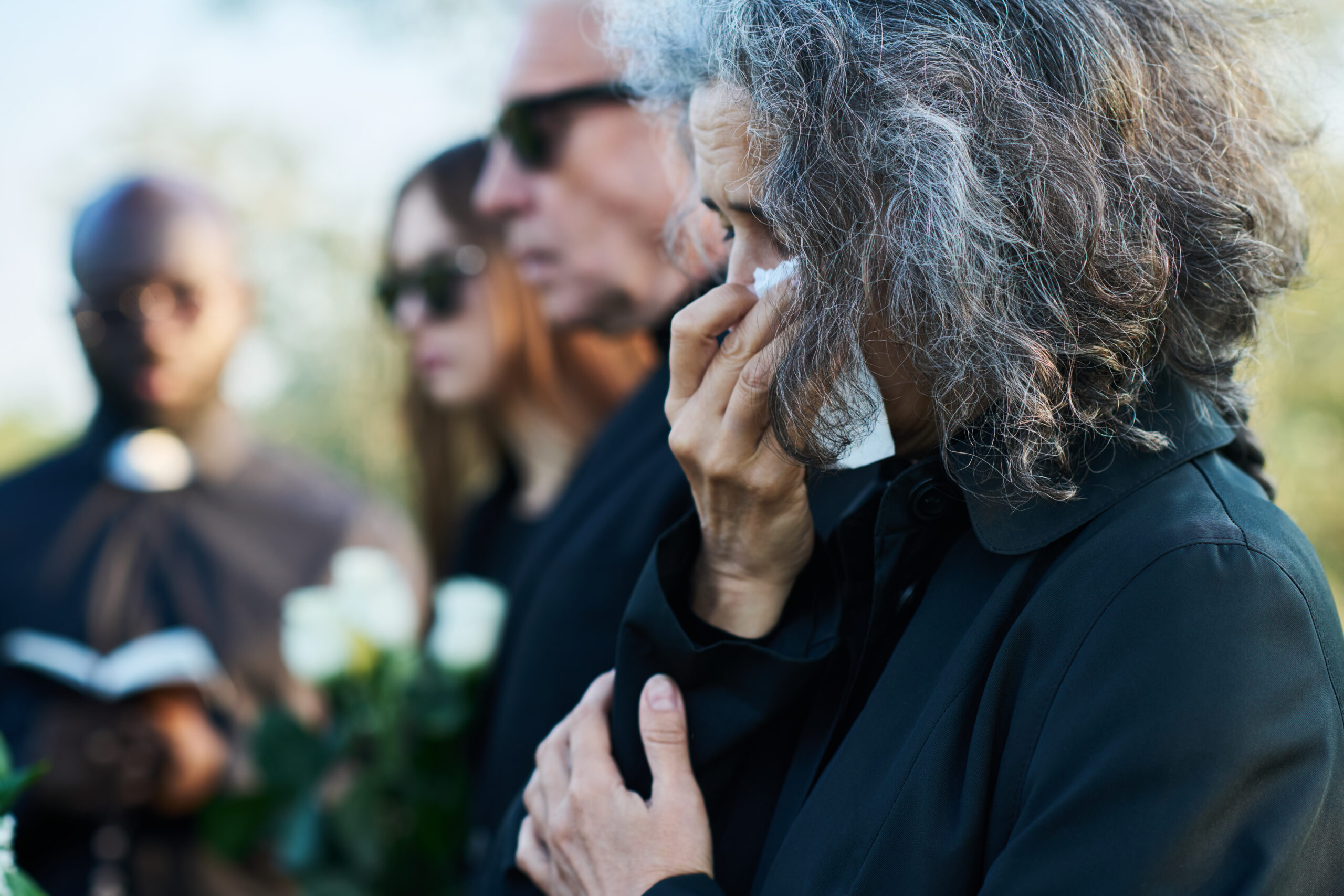
Family grieving after the loss of a loved one
While three years may seem like a generous window, starting the process early is vital for preserving evidence. Physical evidence at a crash scene can disappear. Witness memories often fade over time. Furthermore, if a claim involves a government entity, the notice requirements may be significantly shorter. This makes immediate legal consultation a priority for many families.
Damages for Wrongful Death and Survival Actions
Under RSMo § 537.020, a survival action allows a personal injury claim to continue through the decedent’s estate when the injured person dies before resolving the case.
Missouri law requires that the decedent’s estate be opened within one year from the date of death. If an estate is not timely established within that one-year period, the survival action cannot be pursued, and the claim is barred.
Missouri case law prohibits the use of “per diem” arguments when seeking damages for pain and suffering. Courts have consistently held that assigning a specific dollar amount per day, per hour, or per unit of time is improper because it encourages speculation and provides juries with an artificial mathematical formula for a subjective loss. Missouri trial courts will sustain objections to these arguments, and counsel is not permitted to present per diem calculations during the closing argument.
Civil vs. Criminal: Two Different Paths
It is common for a Missouri wrongful death claim to move forward alongside a criminal investigation. However, the civil justice system operates independently. It has a much lower burden of proof. In a civil case, you only need to prove the defendant is liable by a “preponderance of the evidence.” This means it is more likely than not that their actions caused the harm.
This distinction is why a family can successfully hold a defendant liable in civil court even if a criminal trial does not result in a conviction. The primary goal of the civil claim is not to jail the defendant. Instead, it is to ensure the family is not left with the financial burden of a preventable tragedy. This provides a sense of closure and economic security.
Contact HEHN for a Free Consultation
Navigating a loss is difficult enough without the added stress of legal paperwork and insurance negotiations. Our legal team is here to listen to your story. Harper, Evans, Hilbrenner & Netemeyer (HEHN) provides the guidance you need to protect your family’s future and honor your loved one’s legacy.
If you have questions about your eligibility or the potential value of your case, please reach out to our legal team today for a confidential review of your claim. We are committed to standing by your side every step of the way.
Damages for Wrongful Death: Bottom Line
Understanding the available damages for wrongful death is essential for ensuring your family’s long-term financial stability. While no amount of money can fully compensate for a loss, Missouri law provides a robust framework for holding negligent parties accountable. It provides survivors with the resources they need to move forward with dignity.
Missouri Wrongful Death Claim: FAQ
If you are considering a Missouri wrongful death claim, you likely have several questions about how the process works.
1. Can multiple family members file separate lawsuits?
No, Missouri law allows only one wrongful death action to be brought against a single defendant for the death of one person. All eligible family members must join the single existing claim to share in the eventual recovery awarded by the court.
2. Does a “wrongful death” have to be an intentional act?
No, most claims are based on negligence. Examples include a distracted driver or a property owner failing to fix a dangerous hazard. While intentional acts also qualify, the majority of cases involve a failure to exercise reasonable care.
3. Can I still file if the deceased was partially at fault?
Yes, Missouri follows a “pure comparative negligence” rule. You can still recover damages even if the deceased was partially responsible. However, the total award will be reduced by the percentage of fault assigned to them.
4. What happens if family members cannot agree on a settlement split?
Under RSMo Section 537.095, the court must approve the settlement and apportion the proceeds. If there is no agreement, the judge will hold a hearing and divide the funds in proportion to each person’s losses.
5. How are the lawyer’s fees handled in these cases?
Most wrongful death attorneys work on a contingency fee basis. This means they only receive a percentage of the final settlement or verdict. This allows families to pursue justice without paying upfront hourly legal fees.
About Our Law Firm: Harper, Evans, Hilbrenner & Netemeyer
Harper, Evans, Hilbrenner & Netemeyer (HEHN) has spent decades serving Missouri families with compassion and aggressive legal advocacy. We specialize in high-stakes personal injury and wrongful death cases, ensuring clients receive the “fair and just” compensation the law allows. Learn more about our mission and experienced legal team today.